A Premiere Foretold
During a visit to the Nocaut offices, Paula — Creative Writer and technology enthusiast — dropped a question into the room: “Did you hear they’re presenting an AI-made film at Cannes?” Everyone looked at each other, puzzled. Was this really happening? Curious and slightly unsettled, we dug in — and sure enough, the headline confirmed it: OpenAI announces “Critterz,” the first major animated feature film made entirely with artificial intelligence. The following line added: The feature is set to premiere at the 2026 Cannes Film Festival and already has a team of 30 people working on it.
With that news as a starting point, we kept digging. Back in 2023 — the year AI became a household name, simultaneously thrilling and unsettling — a U.S. Creative Director named Chad Nelson started quietly experimenting with Dall-e, generating 2D illustrated characters. He eventually knocked on OpenAI’s door to show them what he’d built: a colorful, charming universe of characters, illustrated by their own intelligence. By all accounts, the team was amazed — and from that meeting, the seed of a full feature was planted. The first presentation of “Critterz” debuted that year as a short film, bringing together animators, screenwriters, sound designers, and voice actors. The same year, at Nocaut, we started poking at the AI beast ourselves.
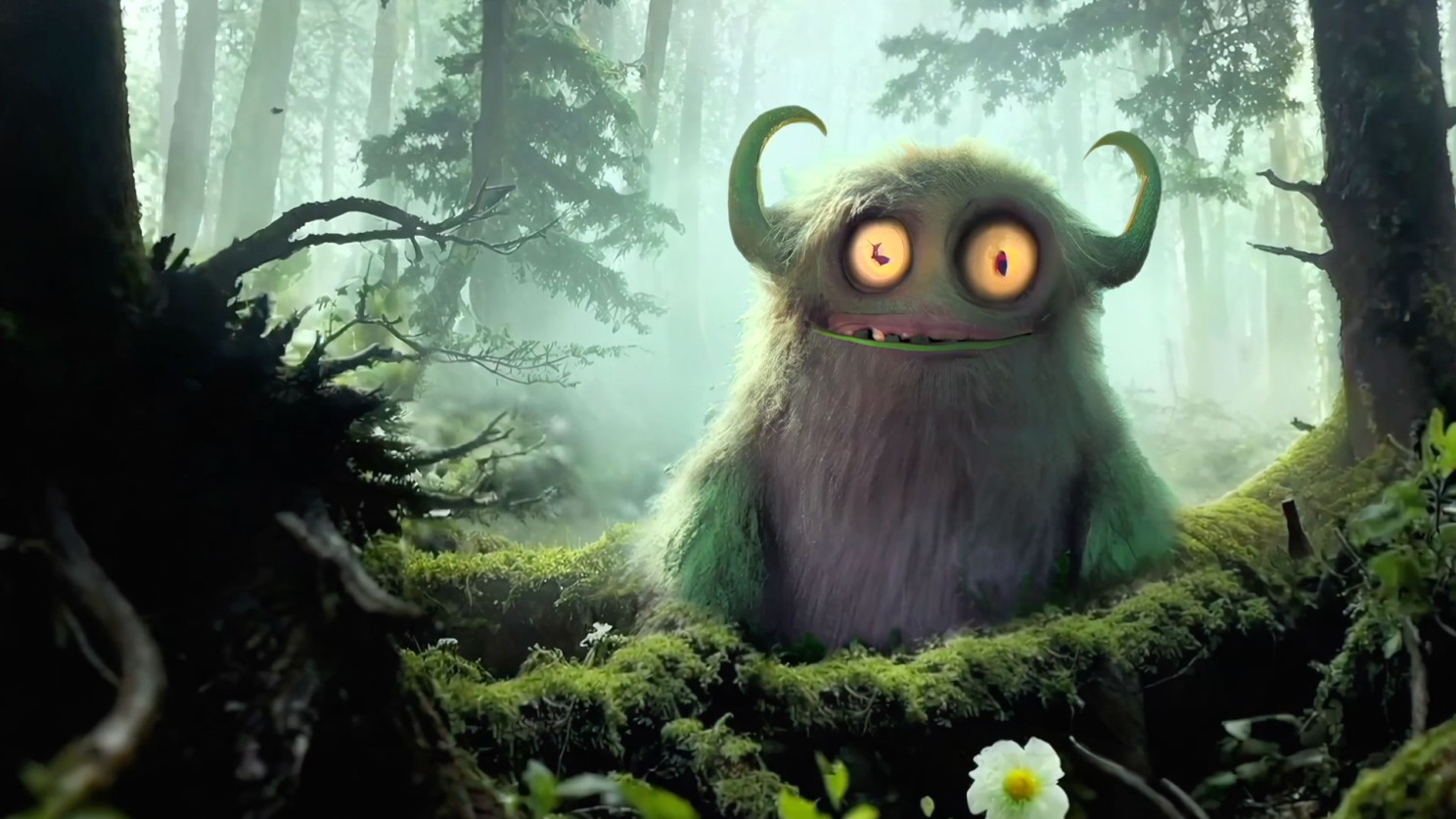 02/ Critterz: An animated short film designed with AI. critterz.tv
Weeks went by, and — by coincidence or algorithm — the nocauters’ feeds started converging. In those conversations that happen between desks and hallways, we realized several of us had been served ads from different brands whose visual and audiovisual aesthetic was created with artificial intelligence.
We don’t know whether those spots were conceived entirely with AI — in terms of script, concept, duration, or music — but at least in what concerns us and what we can engage with, AI keeps gaining ground.
So what’s the real surprise? What actually moves us? Is it that artificial intelligence is finally making it to the big screen — or that it’s already become part of our everyday creative toolkit?
Emanuel, an animator at Nocaut who’s been experimenting with Nano Banana, Google Veo 3, and Midjourney, weighs in:
“In my case, it’s been working well for creating scenes that would have taken hours of shooting and extra budget to achieve a similar result. You always have to consider what the piece calls for and what the goal is.”
Ema continues:
“… there are things I still can’t figure out with these generators — like how they don’t respect the speeds and timing you ask for, and there are imperfections in continuous camera movements. I’m sure these will be resolved in the very near future, but right now they require time, people, and a real willingness to study.”
One thing that caught our attention about these AI ads: they weren’t trying to hide it. They weren’t passing themselves off as real, and they weren’t making a statement about AI either. These pieces — featuring humans with smooth, blurred skin, soft backgrounds, and deliberate imperfections — are designed to blend into the constant stream of visual stimuli we consume every day, as one more tool in the toolkit.
So where does this leave AI? The general reaction to these pieces is still far from full acceptance — part of the audience recoils, feels unsettled. But is that just resistance to something new? If we’re talking about telling stories that resonate with people — the way film and advertising do — does the tool really matter? In ten years, will this even be a conversation?
For now, we’ll keep asking questions — and keep putting our hands and heads into studying and practicing. Because at the end of the day, artificial intelligence doesn’t replace human creativity: it redefines it, and challenges us to find new ways to collaborate, learn, and adapt.
Text: María Emilia Rismant / Images: Ema Scoponi
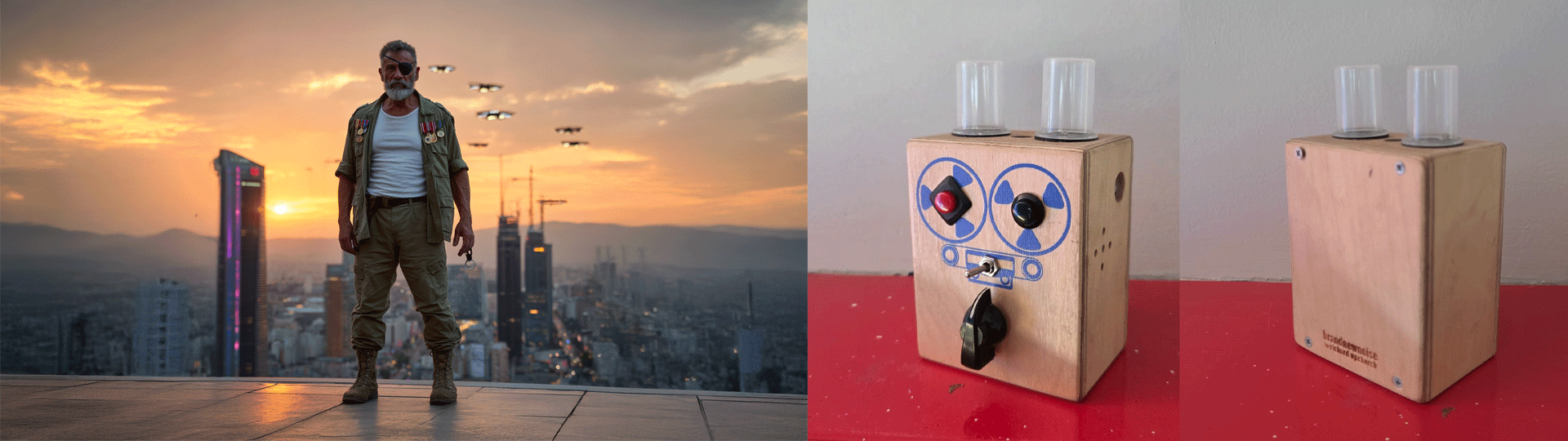
Ensayo #1 / Veteran — The challenge: integrate a real object photographed in our office into an AI-generated environment. A static image was first created with Nano Banana, then a video sequence was generated with Google Veo 3 combining both. 03/ Result (GIF). Prompt: Medium shot of a 60-year-old Argentine ex-military war veteran, rugged and weathered, with a black eye patch and a deep scar peeking out beneath it. He wears worn combat boots, green cargo pants, a plain white t-shirt, and an olive military-style shirt adorned with three service medals on the right side of his chest. In his hand, he firmly holds the switch shown in reference image 01. He stands on the rooftop of a towering skyscraper in a futuristic city at sunset, bathed in dramatic golden-orange light. In the distant skyline, sleek drones hover and patrol above the glowing neon cityscape, adding a cinematic, sci-fi atmosphere.
Ensayo #2 / Money — Same sequence as Ensayo #1 — the goal here was to achieve consistency between different shots to generate continuity. Prompt: Industrial indoor scene, cinematic lighting, detailed assembly line environment, metallic suitcase placed open at the center of the frame, part of an automated production process, mechanical arms and conveyor belts around, reflections on steel surfaces, volumetric light filtering through factory dust, high detail, hyper-realistic, depth of field, 35mm lens, 8k, cinematic composition, moody atmosphere.
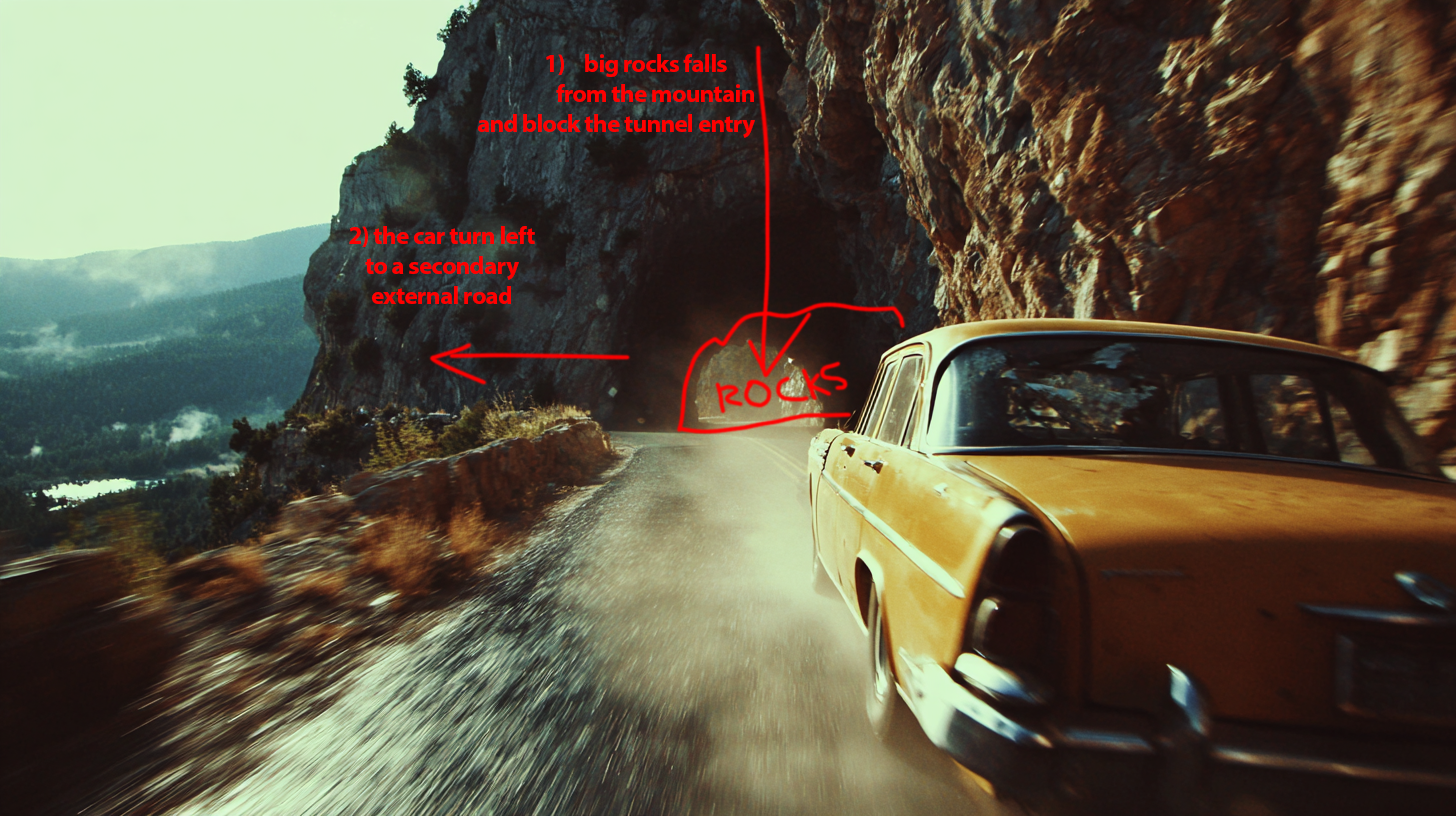
Ensayo #3 / Yellow Car — In this test, text was added on top of the static image so that Veo 3 could develop the video sequence. Prompt: 1980s camera film grain style, cinematic framing, rear camera view of a battered yellow car, speeding along a mountain road towards a dramatic fork. To the left, a dark tunnel carved into the rocky mountain, mysterious and ominous, faint light glowing inside. To the right, the road descends sharply along the steep mountainside, overlooking a vast valley bathed in late afternoon golden light. Dust and smoke trail behind the car, tension-filled atmosphere, high contrast shadows, cinematic suspense, vintage film look.